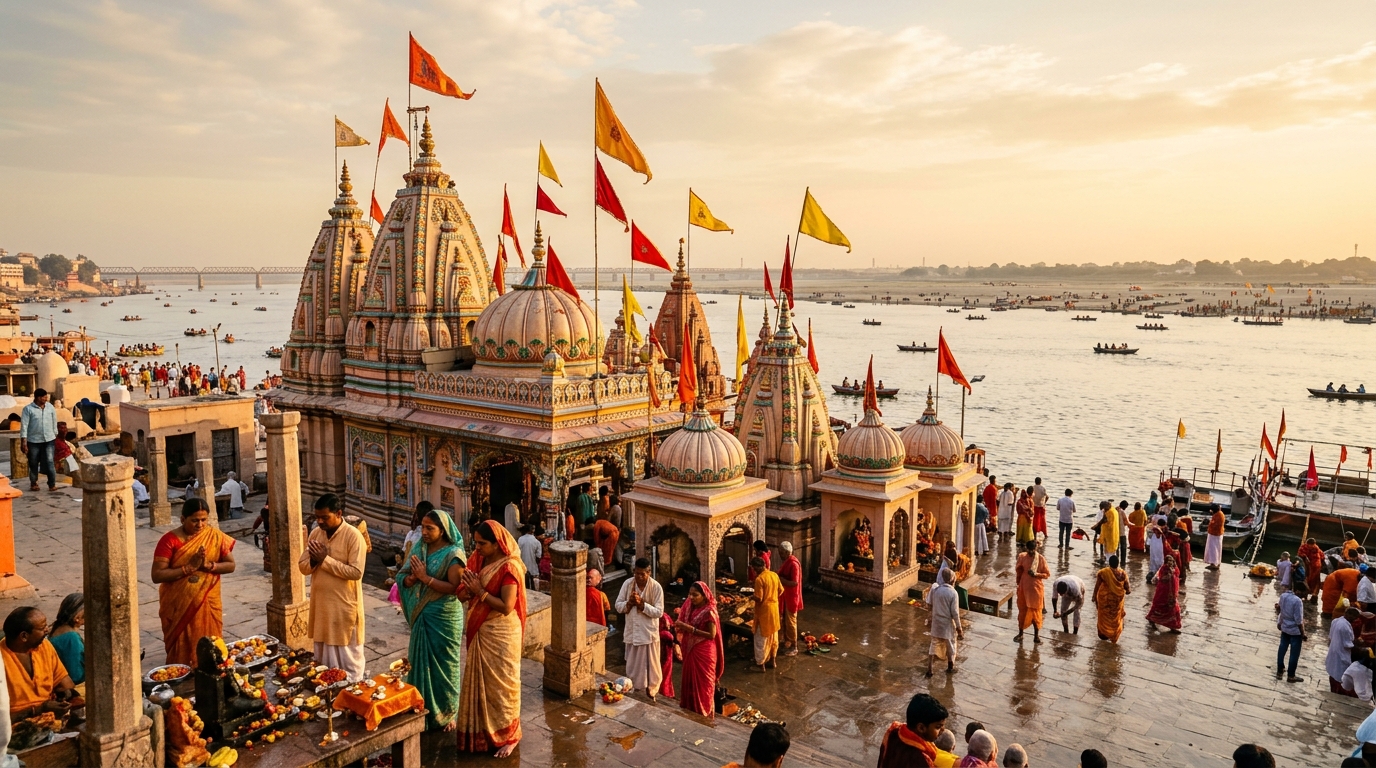
Top 10 Historic Ghats & Rivers of Varanasi
Exploring Varanasi's famous ghats (Dashashwamedh, Manikarnika, Assi) along the Ganges, with boat ride guides and historical backgrounds.
The Waterfront of Eternity: Varanasi's Ghats
In Varanasi, the boundary between the physical and spiritual worlds is marked by the stone steps leading down to the sacred Ganges River. These steps, known as Ghats, form a continuous 8-kilometer crescent along the western bank of the river. There are approximately 84 ghats in Varanasi, each with its own history, patron deity, and architectural style. For centuries, these ghats have served as bathing places, cremation grounds, meeting halls, and outdoor temples.
To truly understand Varanasi, one must spend time on its ghats at dawn and dusk. The river flows northward here, considered highly auspicious in Hindu cosmology, reflecting the sunrise over the eastern sandy plains. In this guide, we explore the top 10 most historic ghats in Varanasi, explaining their legends, rituals, and visitor protocols.
The Cycle of Life: Bathing and Cremation Ghats
- Bathing and Ritual Ghats: Ghats like Dashashwamedh and Assi are vibrant zones where pilgrims perform daily ablutions, chant scriptures, practice yoga, and offer prayers to the river.
- The Cremation Ghats: Manikarnika Ghat and Harishchandra Ghat are the sacred burning ghats. Here, funeral pyres burn 24/7. Devotees believe that cremation here leads directly to Moksha (liberation). Visitors are permitted to observe from a distance, but photography is strictly prohibited out of respect.
Reviews of the Most Historic Ghats
1. Dashashwamedh Ghat
The central and most vibrant ghat in Varanasi. According to legend, Lord Brahma sacrificed ten horses (dasa-aswa-medha) here during an ancient ritual.
- The Ganga Aarti: Every evening, a team of young priests performs a synchronized worship ritual involving large brass oil lamps, incense, and chants, drawing thousands of spectators on land and boats.
- Visitor Tip: Rent a wooden boat by 5:30 PM to secure a prime viewing spot on the water before the Aarti starts.
2. Assi Ghat
Located at the southern end of the ghat crescent, where the Assi River meets the Ganges.
- Subah-e-Banaras: A highly popular spiritual program held daily at sunrise, featuring morning Vedic chants, a classical music performance, and a yoga session on the ghat steps.
- Vibe: Relaxed and artistic, popular among students from the nearby Banaras Hindu University (BHU).
3. Manikarnika Ghat
The primary cremation ghat of Varanasi, steeped in ancient myth.
- The Legend: It is believed that Goddess Parvati dropped her earring (Manikarnika) here, and Lord Shiva dug a sacred well to find it.
- Visitor Tip: Maintain silence and absolute decorum when walking near this ghat.
Practical Advice for River Tours
- Negotiate Boat Rates: Always agree on the price before boarding any boat. Manual rowboats should cost between ₹200 to ₹400 per hour, while larger motorboats range from ₹800 to ₹1,500.
- Best Time for Tours: A boat ride at 5:00 AM allows you to watch the city wake up, with bathers chanting in the golden light. A boat ride at 6:00 PM is best for viewing the Ganga Aarti.
- Respect Local Rituals: Avoid interfering with bathers or taking direct portraits of pilgrims performing sacred rituals without their consent.