My India
India — where 5,000 years of civilization meet the pulse of 1.44 billion dreams. A land of fearless innovators, timeless wisdom, and breathtaking diversity — rooted in history, driven by tomorrow.
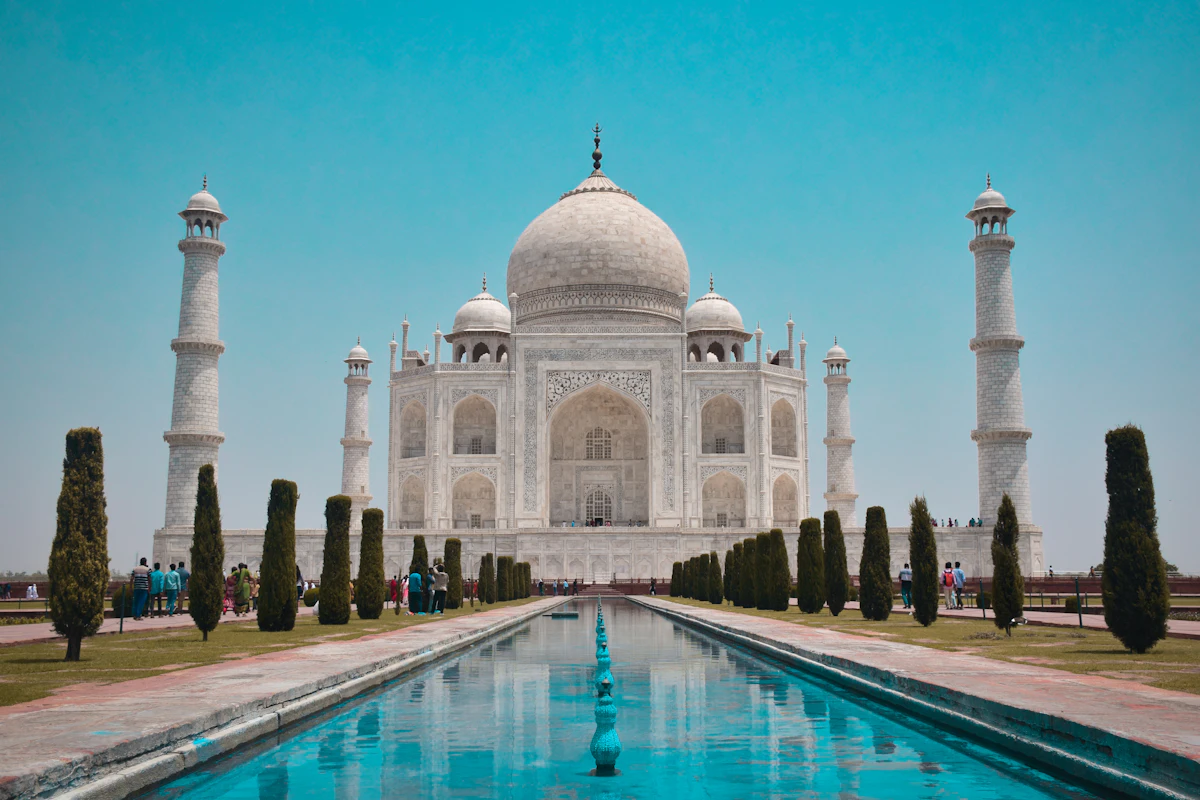
Taj Mahal
Agra, Uttar Pradesh
Built between 1631 and 1648 by Mughal Emperor Shah Jahan in memory of his favorite wife, Mumtaz Mahal. This white marble mausoleum is the jewel of Muslim art in India and is widely recognized as one of the Seven Wonders of the World.
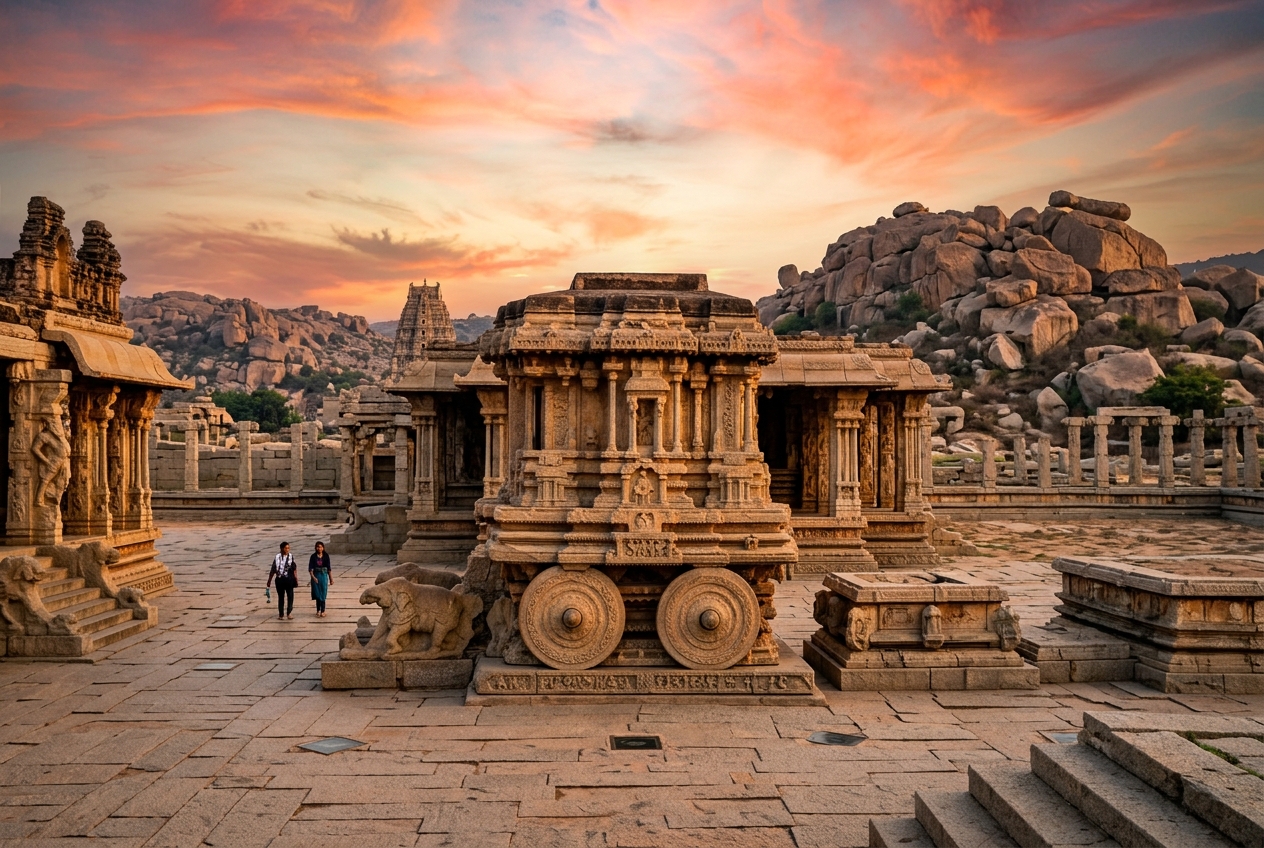
Hampi Monuments
Bellary, Karnataka
The capital of the historic Vijayanagara Empire in the 14th century. The ruins stretch over 4,100 hectares and feature iconic structures like the stone chariot of the Vittala Temple and the Virupaksha Temple, set in a unique boulder-strewn landscape.

Sanchi Stupa
Raisen, Madhya Pradesh
Commissioned by Emperor Ashoka in the 3rd century BCE, the Great Stupa of Sanchi is the oldest stone structure in India. It features beautifully carved gateways (Toranas) depicting narratives of Buddha's life, serving as an architectural icon of peace.

National Bird
Indian Peacock
The Indian Peacock (Pavo cristatus) is celebrated as the national bird. Its iridescent blue-green plumage and spectacular tail feathers symbolize grace, joy, beauty, and rich folklore. It is fully protected under the Indian Wildlife Protection Act.
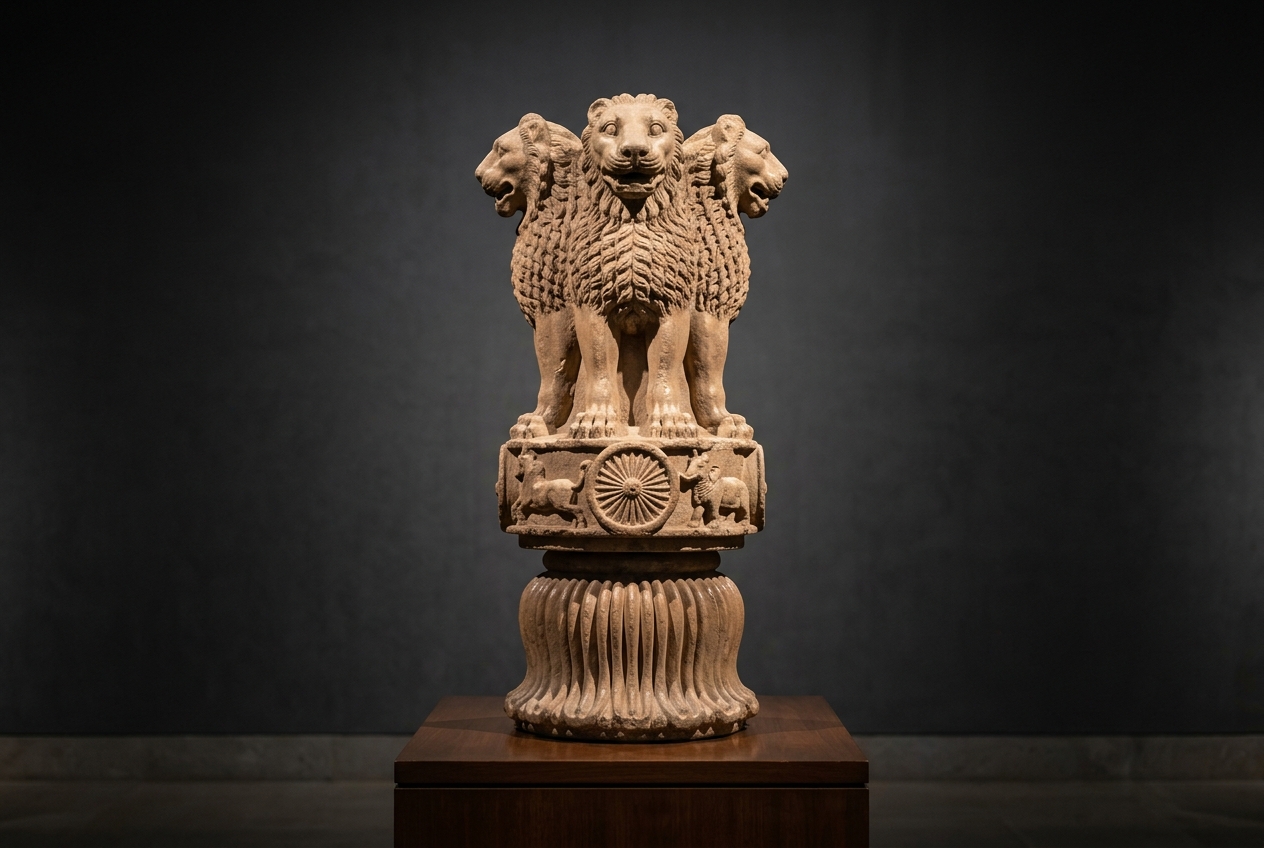
National Emblem
Lion Capital of Ashoka
Adopted from the Mauryan pillar at Sarnath built by Emperor Ashoka in 250 BCE. It features four Asiatic lions standing back-to-back, symbolizing courage, power, pride, and confidence, sitting atop a wheel (Dharma Chakra) flanked by a horse and bull.

Charminar
Hyderabad, Telangana
Constructed in 1591 by Sultan Muhammad Quli Qutb Shah to celebrate the end of a devastating plague. This square monument features four grand arches and 56-meter tall minarets housing a mosque on the upper floor, standing at the heart of Hyderabad.
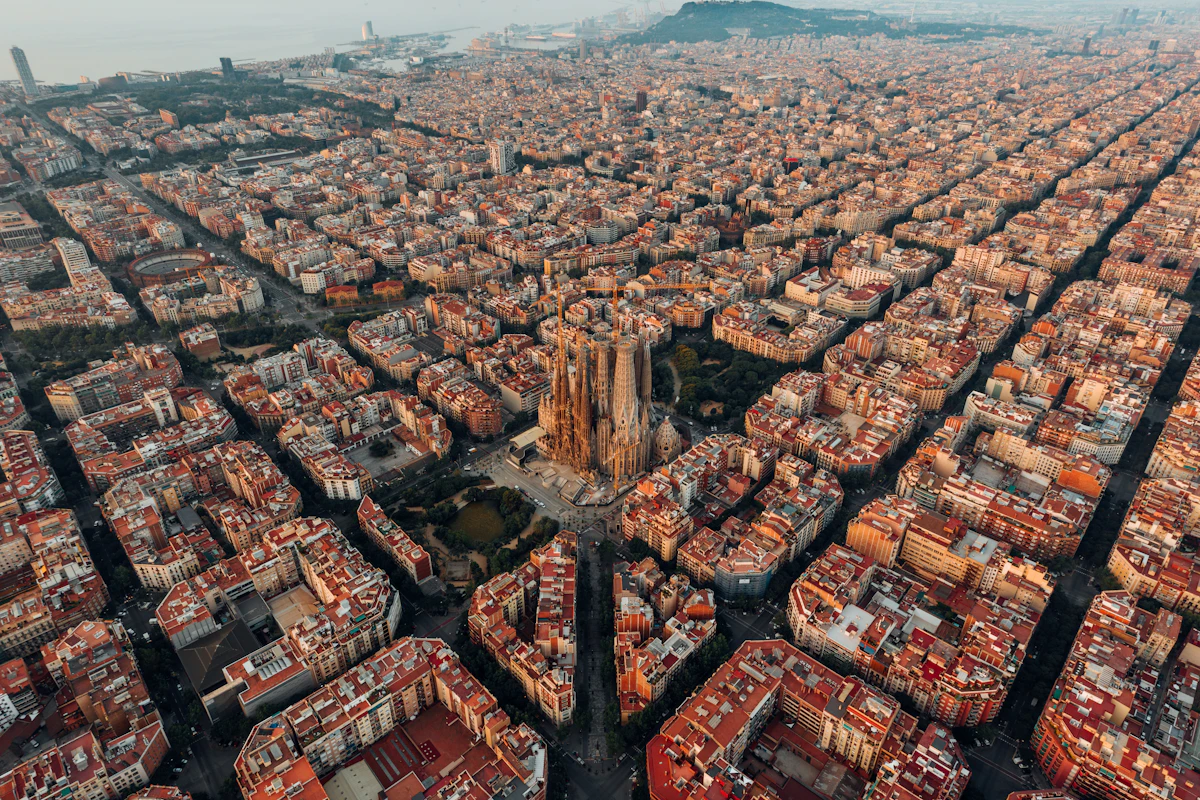
Mysore Palace
Mysuru, Karnataka
The official residence of the Wadiyar dynasty, built in 1912. Designed by Henry Irwin, it is an outstanding example of Indo-Saracenic architecture. During the Dasara festival, the palace is spectacularly illuminated by over 97,000 light bulbs.
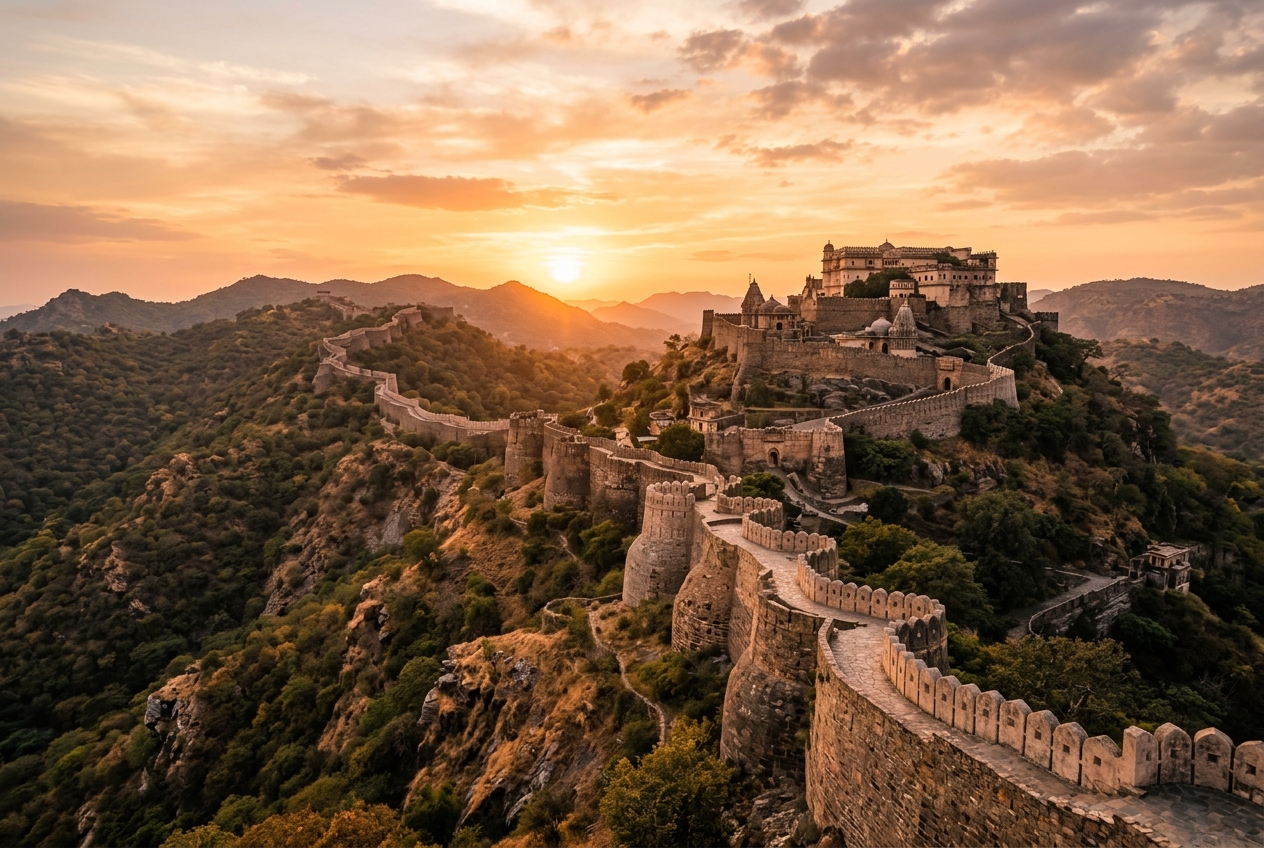
Kumbhalgarh Fort
Mewar, Rajasthan
Built by Rana Kumbha in the 15th century, this fort features the second-longest continuous wall in the world (36 kilometers long), after the Great Wall of China. It stands at an altitude of 1,100 meters, offering panoramic views of the Aravalli hills.

Bharatanatyam
Tamil Nadu
One of the oldest classical dance forms, originating in the temples of Tamil Nadu as Sadir Attam. Characterized by a fixed upper torso, bent-leg postures (Araimandi), and intricate hand gestures (Mudras) to narrate stories.
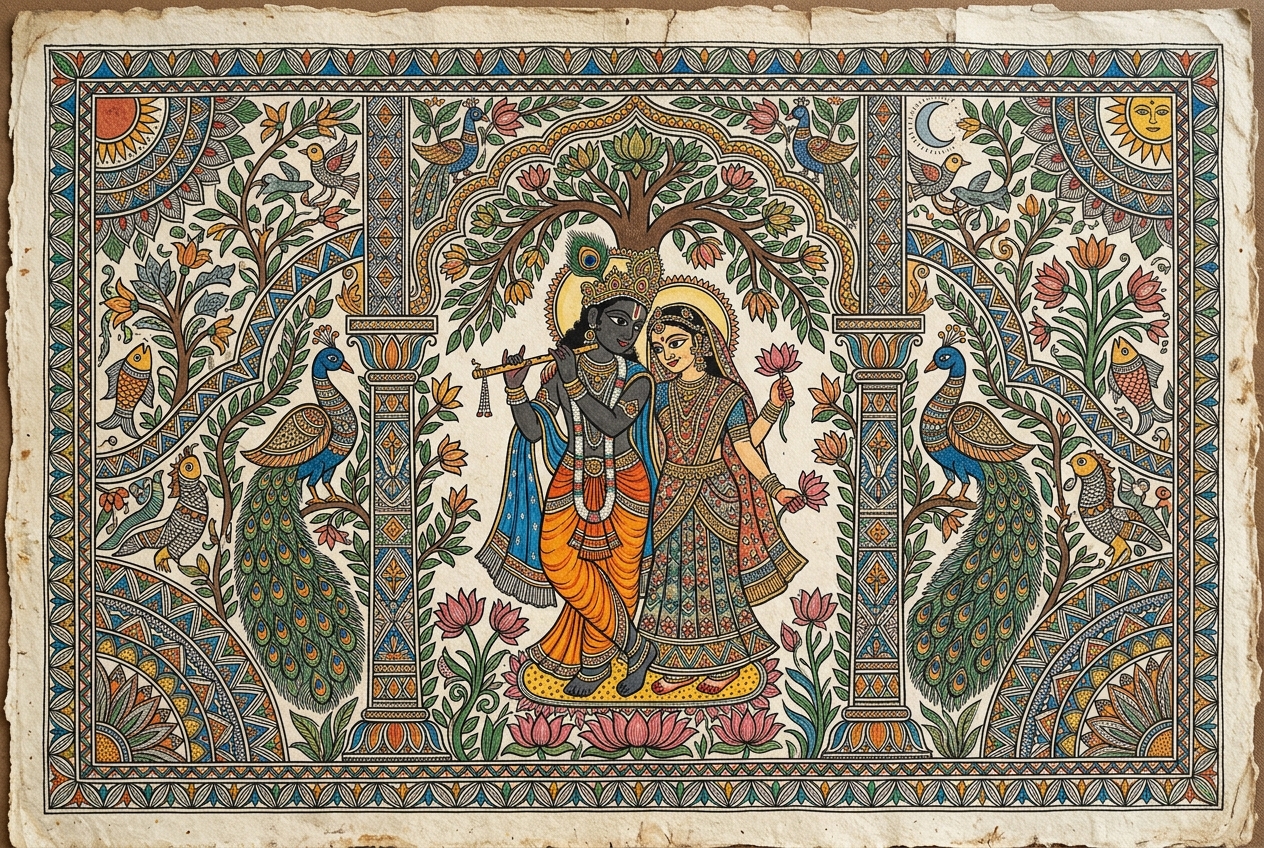
Madhubani Painting
Mithila, Bihar
A traditional art style done by women of the Mithila region. Using natural dyes, fingers, twigs, and matchsticks, it features geometric patterns depicting nature and deities, with no space left empty.

Durga Puja
Kolkata, West Bengal
A massive carnival celebrating the victory of Goddess Durga over Mahishasura. It is famous for grand temporary structures (Pandals) housing clay idols, featuring dhunuchi dances and traditional drumming.
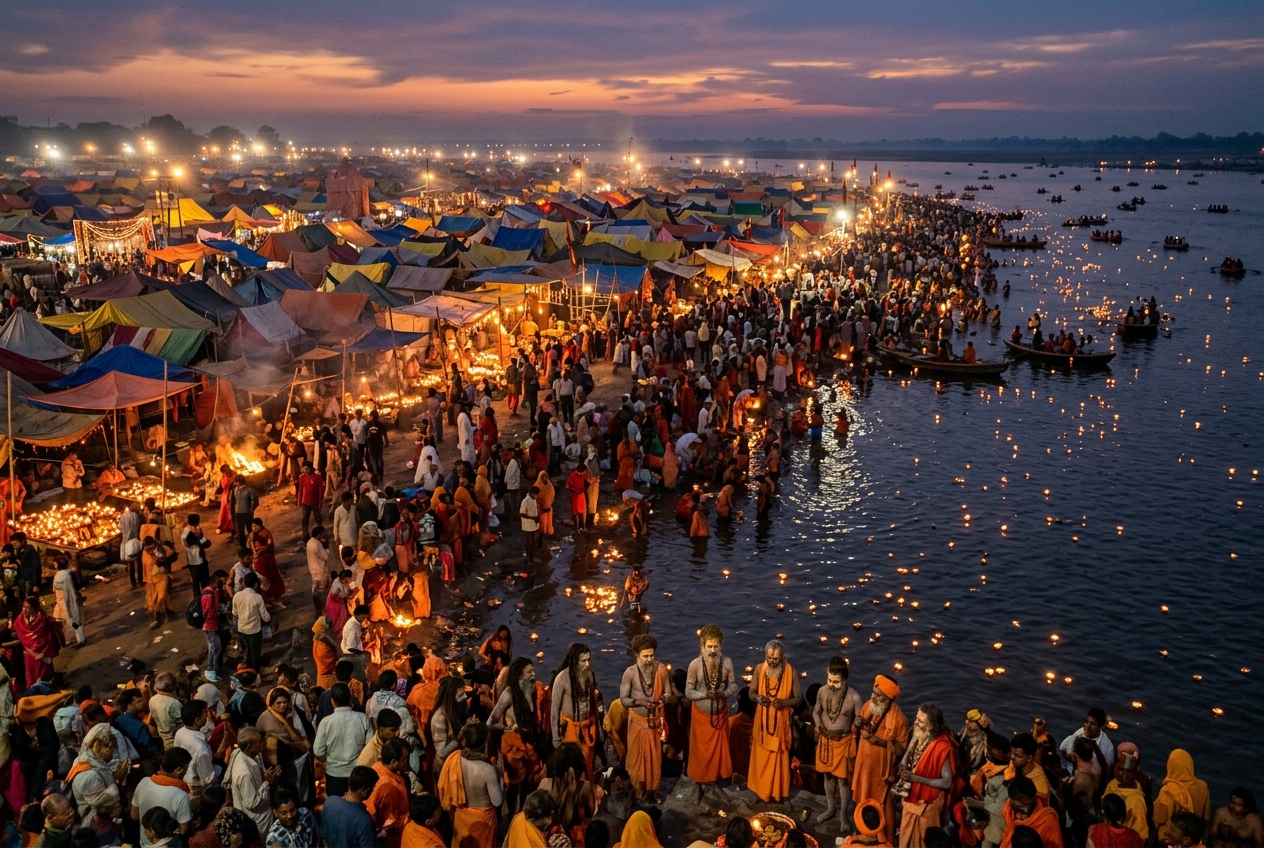
Kumbh Mela
Four River Sites, India
The largest peaceful congregation of humanity in the world, rotating between Prayagraj, Haridwar, Nashik, and Ujjain. Millions of pilgrims take holy baths to cleanse sins.
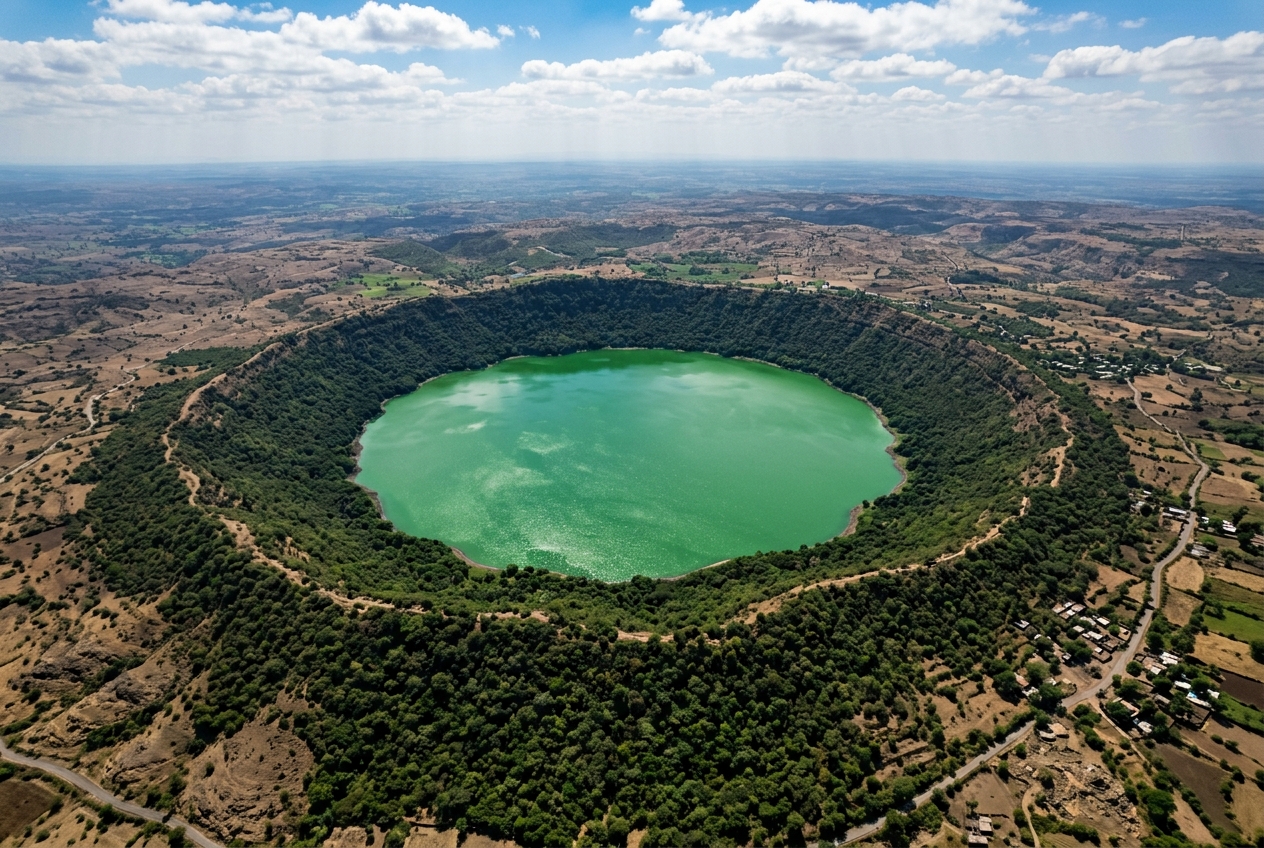
Lonar Crater Lake
Buldhana, Maharashtra
A unique saline and alkaline lake formed by a meteorite impact 52,000 years ago in Deccan basalt rock. It is one of the only impact craters in basaltic rock globally, noted for its unique chemistry.

Living Root Bridges
East Khasi Hills, Meghalaya
Bridges hand-woven from the aerial roots of Ficus elastica (Rubber) trees by Khasi and Jaintia tribes. These biological structures grow stronger over time and can withstand heavy monsoon floods.
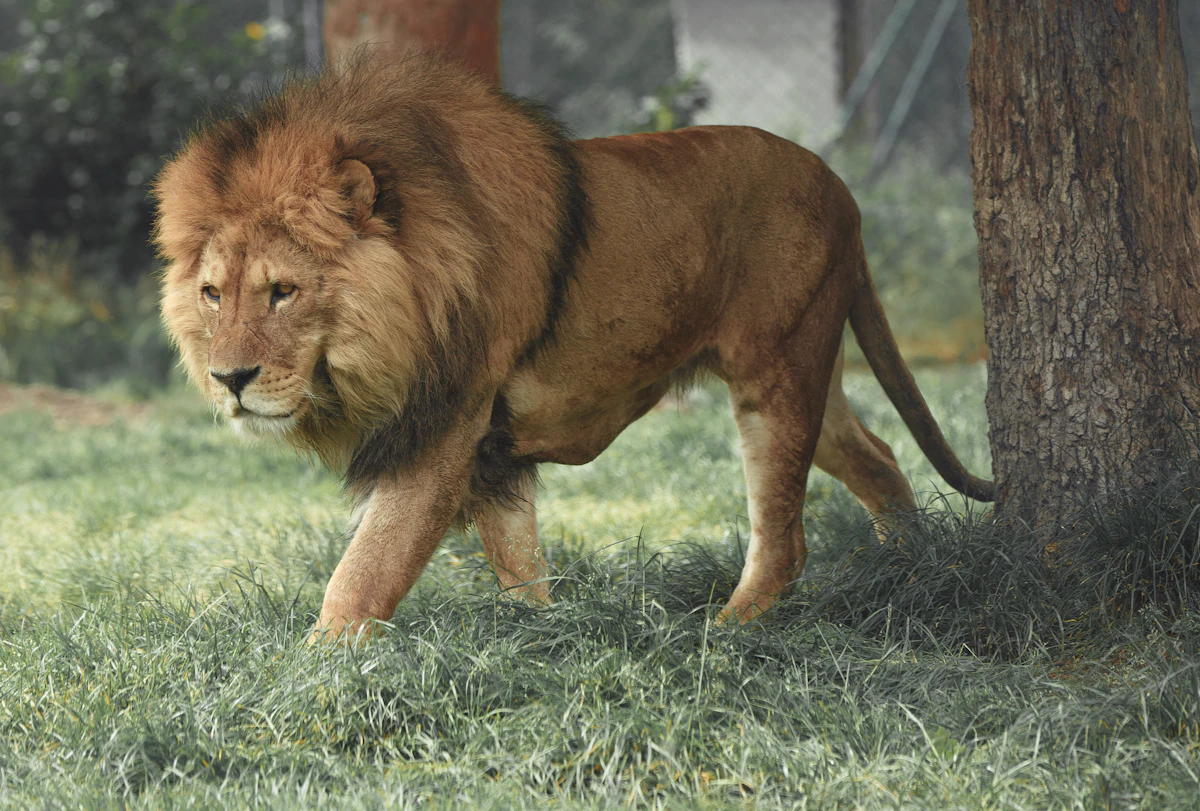
Gir National Park
Junagadh, Gujarat
Established in 1965, Gir is the only natural sanctuary in the world hosting the Asiatic Lion. The deciduous forest and scrubland ecosystem has successfully saved this majestic cat from near extinction.
India's Pride & Power
Key achievements that define the nation
India By Numbers
Explore rich data across all dimensions
🌐 Geography
India In Figures
Filter by Cultural Area
🇮🇳All Heritage Items
Showing 12 of 206
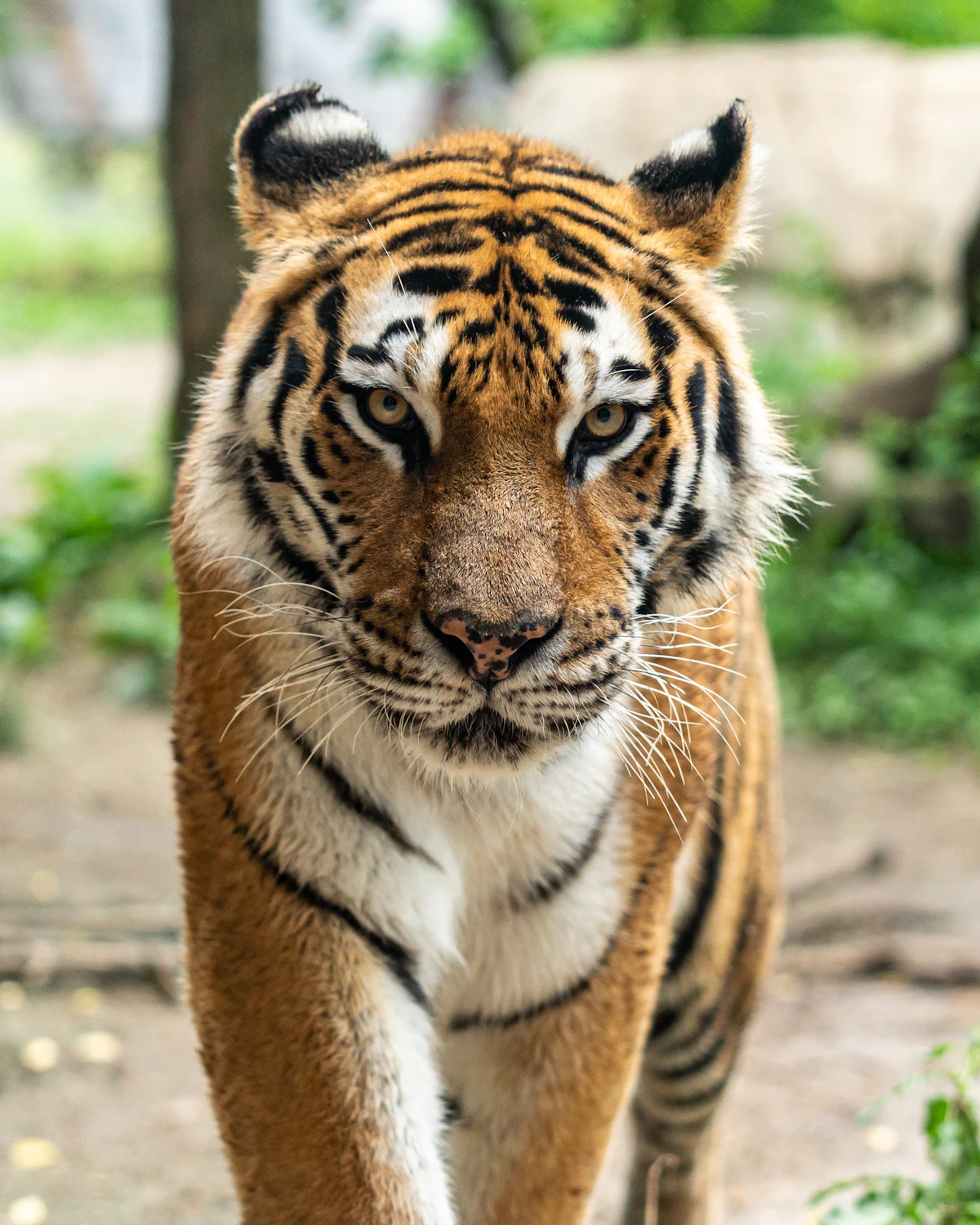
National Animal
Scientifically known as Panthera tigris, the Royal Bengal Tiger is India's official national animal. It symbolizes raw power, unmatched strength, and agility. It is closely protected under Project Tiger, launched in 1973, which is one of the world's most successful species conservation initiatives.
National Bird
The Indian Peacock (Pavo cristatus) is celebrated as the national bird. Its iridescent blue-green plumage and spectacular tail feathers symbolize grace, joy, beauty, and rich folklore. It is fully protected under the Indian Wildlife Protection Act.

National Flower
The Lotus (Nelumbo nucifera) holds a sacred position in Indian art, mythology, and literature. Symbolizing spiritual purity, fertility, wealth, and knowledge, the lotus grows beautifully in muddy waters, representing triumphs over adversity.
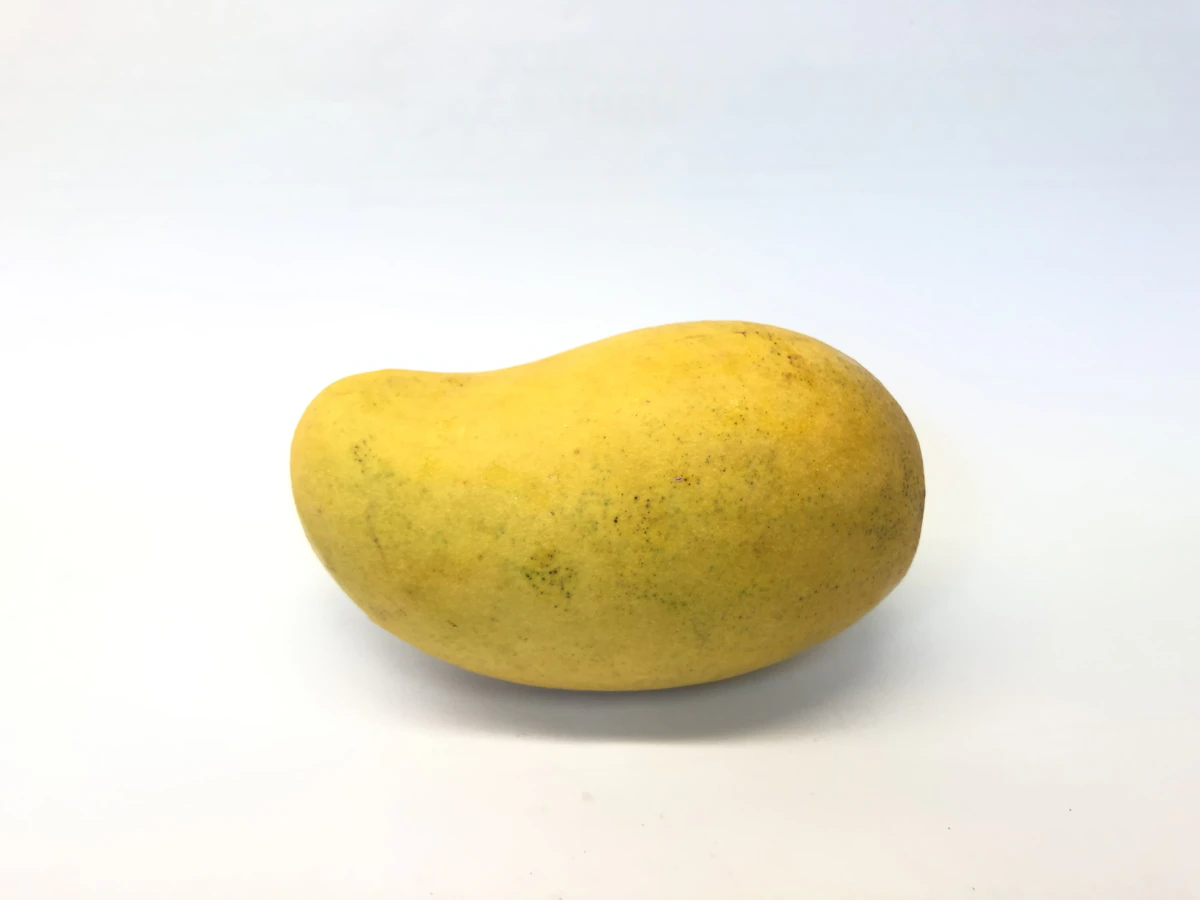
National Fruit
Mango (Mangifera indica), the 'King of Fruits', has been cultivated in India for over 4,000 years. It represents prosperity, abundance, and the warmth of Indian summers. It features heavily in classical arts, cuisine, and cultural ceremonies.

National Tree
The Indian Banyan (Ficus benghalensis) is a massive tree that extends its branches and drops aerial roots, which grow into secondary trunks. It symbolizes eternal life, unity, and shelter, serving as a traditional focal point for village councils.

National River
The Ganges is India's longest river, originating in the Himalayas at Gangotri. It is deeply revered as a goddess (Ganga Maiya) by millions. Beyond its religious sanctity, the river basin sustains over 400 million people with vital agricultural irrigation.

National Aquatic Animal
The Ganges River Dolphin (Platanista gangetica) is a unique freshwater dolphin that is practically blind, navigating using echo-location. It serves as a crucial indicator of the purity and ecological health of the Ganges-Brahmaputra river system.

National Heritage Animal
Declared as the national heritage animal to strengthen wildlife conservation, the Indian Elephant (Elephas maximus) represents wisdom, royal heritage, and peaceful coexistence. It features prominently in religious processions and historic epics.

National Motto
Translated as 'Truth Alone Triumphs', this national motto is inscribed in Devanagari script at the base of the state emblem. It originates from the ancient Mundaka Upanishad, serving as a guiding ethical pillar for the democratic republic.
National Emblem
Adopted from the Mauryan pillar at Sarnath built by Emperor Ashoka in 250 BCE. It features four Asiatic lions standing back-to-back, symbolizing courage, power, pride, and confidence, sitting atop a wheel (Dharma Chakra) flanked by a horse and bull.

National Flag
Designed by freedom fighter Pingali Venkayya, the Tiranga features three horizontal bands: Saffron (courage/sacrifice), White (peace/truth), and Green (faith/fertility). In the center is the navy blue Ashoka Chakra with 24 spokes, representing continuous progress.

National Anthem
Composed in Bengali by Nobel Laureate Rabindranath Tagore, the national anthem captures the diverse geography and unified spirit of India. It was officially adopted by the Constituent Assembly on January 24, 1950, and has a playing time of 52 seconds.
Did You Know?
Chess was invented in India around 600 CE as Chaturanga, the predecessor of modern chess.
Zero was invented in India by mathematician Brahmagupta in 628 CE, changing mathematics forever.
Yoga originated in India over 5,000 years ago from ancient Vedic tradition and Upanishads.
India has the world's largest school meal program — Mid-Day Meal Scheme — serving 120M+ children daily.
India was the only known source of diamonds in the world until 1896, when Brazil mines were discovered.
Sushruta, an ancient Indian physician, is called the Father of Surgery (600 BCE); he performed complex operations.
India became the first country to land a spacecraft near the Moon's South Pole in 2023 with Chandrayaan-3.
India has the world's largest bovine population — over 300 million cattle and buffaloes.
India on the World Stage
India Through The Ages
From ancient civilization to modern space power · Tap to expand