Top 10 Historical Places to Visit in Pune
Deep dive into Pune's historical sites (Shaniwar Wada, Aga Khan Palace, Sinhagad Fort) outlining Maratha history and visiting guides.
The Heritage of the Peshwas and Beyond
Pune is a city deeply rooted in history, serving as the seat of the Peshwas (prime ministers) of the Maratha Empire during the 18th century. It was also a critical epicenter for India's social reform movements and the struggle for independence. The city's landscape features a mix of fortresses, palaces, temples, and museums that tell stories of bravery, governance, and sacrifice.
For travelers interested in Indian history, Pune is a treasure house. You can explore the ruins of a Peshwa palace in the heart of the old city, hike to a mountaintop fortress where key battles were fought, and visit the serene Italian-style palace where Mahatma Gandhi was imprisoned. In this guide, we review the top 10 historical places to visit in Pune, comparing their historical context and visitor facilities.
The Historic Eras of Pune
- The Maratha & Peshwa Era (17th-18th Century): Marked by stone fortresses like Shaniwar Wada, Sinhagad Fort, and old residential mansions (Wadas) in the historic core of Pune.
- The British & Colonial Era (19th-20th Century): Marked by large institutional buildings, cantonment markets, and structures like the Aga Khan Palace.
- Ancient Rock-Cut Caves: Pune also hosts ancient rock-cut Buddhist caves (Pataleshwar) dating back to the 8th century Rashtrakuta period.
Reviews of Pune's Top Historical Landmarks
1. Shaniwar Wada (Bajirao Road)
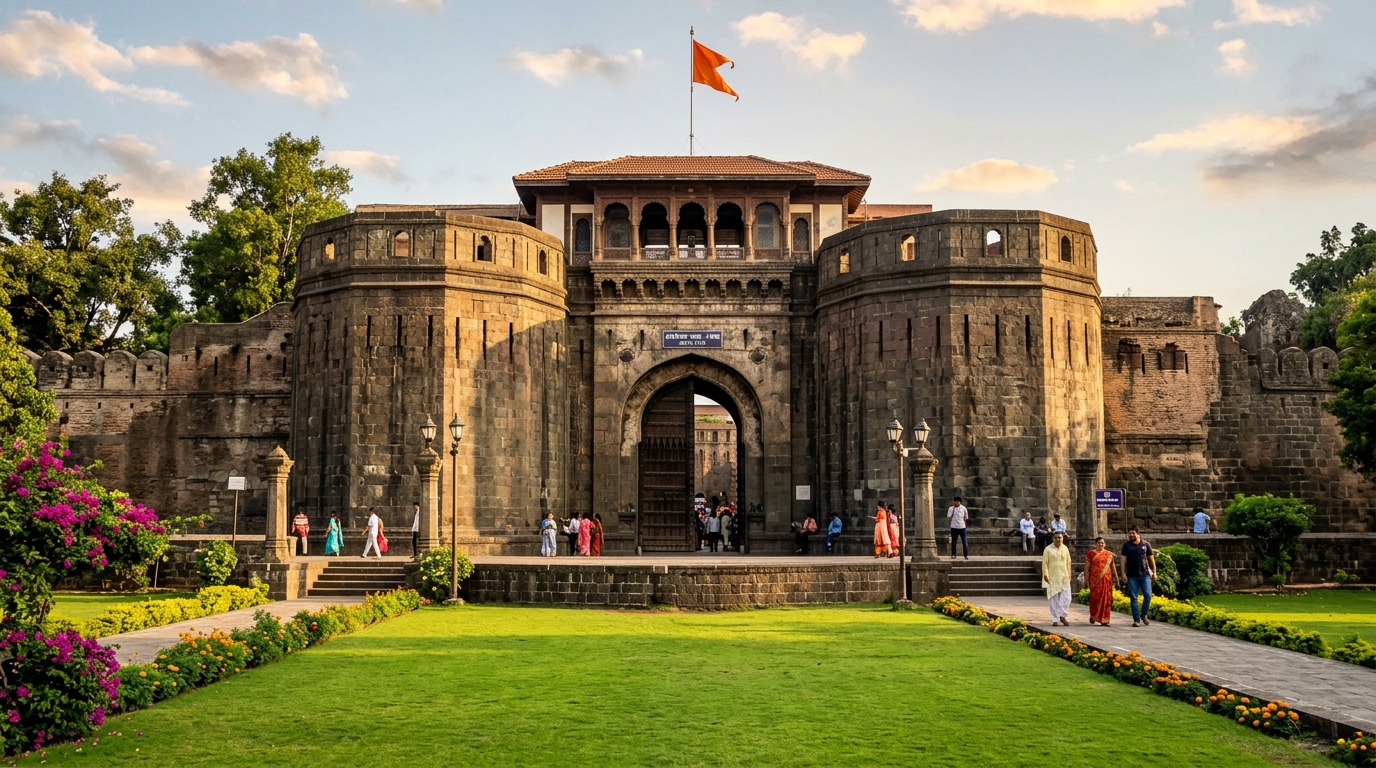
Built in 1732 by Peshwa Baji Rao I, this was the fortified palace-seat of the Peshwas of the Maratha Empire.
- The Experience: While a massive fire in 1828 destroyed the wooden residential structures inside, the imposing stone fortification walls, the grand Delhi Gate (fitted with iron spikes to repel elephant charges), and the fountain foundations remain.
- Visitor Tip: Attend the evening light and sound show which narrates the history of the Maratha Empire.
2. Aga Khan Palace (Kalyani Nagar)
Built in 1892 by Sultan Muhammed Shah Aga Khan III, this Italian-arched palace is a monument of national importance.
- The History: During the Quit India movement in 1942, Mahatma Gandhi, his wife Kasturba Gandhi, and his secretary Mahadev Desai were imprisoned here by the British. Kasturba Gandhi and Mahadev Desai passed away here, and their marble samadhis are located in the palace gardens.
- Vibe: Peaceful and quiet, with spacious lawns and a museum showcasing Gandhi's personal items.
3. Sinhagad Fort (Sinhagad Hill)
Located 30 km southwest of Pune, this is a legendary hill fortress nestled on a cliff of the Sahyadri mountains.
- The History: The fort is famous for the Battle of Sinhagad in 1670, where Maratha commander Tanaji Malusare fought bravely to recapture the fort from the Mughals.
- Visitor Tip: Drive up the winding mountain road early in the morning. Taste local Maharashtrian street food like Pithla-Bhakri and curd served in clay pots by local vendors at the top.
Practical Heritage Walk Advice
- Hire Local Historians: For heritage areas like Shaniwar Wada or Old Pune Wadas, local student groups and heritage trusts run guided weekend walking tours. These are highly informative and reasonably priced.
- Transportation: The older parts of Pune (Shaniwar Peth, Kasba Peth) have very narrow streets. Avoid driving large cars; e-rickshaws or walking are the best ways to navigate.
- Footwear Security: Many historical sites (like Pataleshwar Caves or Saras Baug temple) require removing shoes. Wear slip-on shoes for convenience.