Top 10 Historical Places to Visit in Prayagraj
Step back in time. Explore the top 10 historical monuments and heritage sites in Prayagraj, including Akbar's Fort, Anand Bhawan, and Khusro Bagh.
Prayagraj: A Historic Crossroads of India
Prayagraj (formerly Allahabad) is one of the oldest living cities in India, with roots dating back to the Vedic age. Mentioned in the Ramayana, Mahabharata, and ancient Puranas as 'Prayag' (the place of the sacred sacrifice), the city has witnessed the rise and fall of the Maurya, Gupta, Mughal, and British Empires. Its location at the confluence (Triveni Sangam) of the Ganga and Yamuna rivers has made it a crucial strategic, political, and spiritual hub for thousands of years.
For history lovers, Prayagraj is an open-air museum. The city boasts Ashokan pillar inscriptions, Mughal forts, British-era Gothic architecture, and historic mansions that served as the nerve centers of India's freedom struggle. In this guide, we explore the top 10 historical places to visit in Prayagraj, taking you on a journey through centuries of heritage.
Top 10 Historical Monuments in Prayagraj
1. Prayagraj Fort (Akbar's Fort)
Built by the Mughal Emperor Akbar in 1583, this massive fort stands on the banks of the Yamuna River. It is the largest fort ever constructed by Akbar, showcasing unique Mughal stone craftsmanship.
- Why Visit: Admire the imposing fort walls, the Zenana Palace, and the sacred Patalpuri Temple and Akshaya Vat (indestructible banyan tree) housed inside.
- Visitor Tip: A large portion of the fort is occupied by the Indian Army and is closed to the public; however, the accessible sections are rich with history.
2. The Ashoka Pillar
Located inside the Prayagraj Fort, this single-stone sandstone pillar is of immense historical value, dating back to the 3rd century BC.
- Why Visit: The pillar contains royal inscriptions of Emperor Ashoka, classical Gupta script detailing the victories of Samudragupta (written by Harisena), and later inscriptions by Mughal Emperor Jahangir.
- Visitor Tip: Special permission from the military authorities is required to view this specific monument closely.
3. Anand Bhawan
Anand Bhawan is the historic double-story mansion of the Nehru family. In the 1920s and 30s, it served as the unofficial headquarters of the Indian National Congress.
- Why Visit: The mansion has been converted into a museum, showcasing the personal rooms of Motilal Nehru, Jawaharlal Nehru, and Indira Gandhi, filled with original books, furniture, and letters from the freedom struggle.
- Visitor Tip: The complex also features the Jawahar Planetarium, which runs daily science and astronomy shows.
4. Swaraj Bhawan
Located right next to Anand Bhawan, this older mansion was the original ancestral home of the Nehru family before Anand Bhawan was constructed. It is the birthplace of Indira Gandhi.
- Why Visit: Explore the historic meeting halls where underground plans for the Salt March and Quit India movement were drawn up.
- Visitor Tip: Swaraj Bhawan features a touching sound-and-light show in the evenings that traces the history of the house.
5. Khusro Bagh
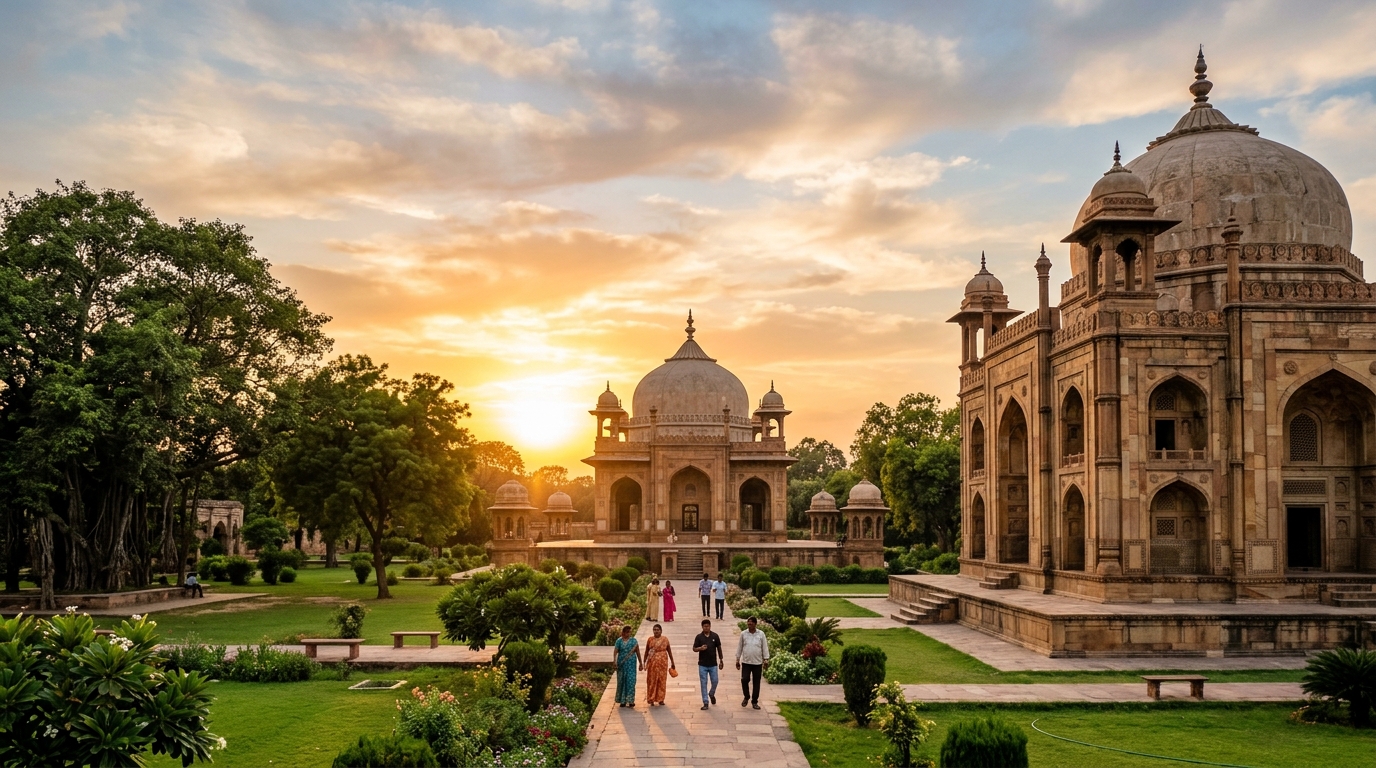
A large walled garden housing the beautiful stone mausoleums of Prince Khusro (the eldest son of Emperor Jahangir), his mother Shah Begum, and his sister Nithar Begum.
- Why Visit: The tombs are fine examples of early Mughal architecture, featuring delicate stone lattice screens (Jalis), floral frescoes, and manicured mango orchards.
- Visitor Tip: Located near the Prayagraj Junction railway station, it is a peaceful spot for a quiet morning walk.
6. Chandrashekhar Azad Park (Alfred Park)
Spanning over 130 acres, this is the largest park in the city. It is historically significant as the site where the legendary freedom fighter Chandrashekhar Azad fought his final battle against British police in 1931.
- Why Visit: Pay respects at the Azad Memorial, visit the Allahabad Museum located inside, and view the colonial-era public library.
- Visitor Tip: Rent a local cycle to explore the vast park paths.
7. All Saints Cathedral (Patthar Girja)
Designed by the famous British architect William Emerson in 1871, this cathedral is an architectural masterpiece of Gothic-revival style, resembling 13th-century European churches.
- Why Visit: Admire the stunning stained-glass windows, intricate marble altar, and towering stone columns.
- Visitor Tip: The cathedral is located in Civil Lines and is particularly beautiful when lit up on Sunday evenings.
8. Mayo Memorial Hall
A grand British-era public assembly hall designed by Richard Roskell Bayne and completed in 1879. It features a 180-foot high tower and red brick architecture.
- Why Visit: It stands as a symbol of the colonial administration, showcasing early British architectural experiments in the United Provinces.
- Visitor Tip: The hall is currently used as a sports complex and is best viewed from the outside for photography.
9. Triveni Sangam
The sacred confluence of the Ganga, Yamuna, and the mythical Saraswati rivers. While spiritually vital, its history dates back to ancient texts and historic travelers like Hiuen Tsang.
- Why Visit: Take a wooden boat ride to the exact point of the confluence, where the deep green water of the Yamuna meets the muddy water of the Ganga.
- Visitor Tip: Rent a boat from Qila Ghat for a shorter and scenic route.
10. Allahabad High Court
Established in 1866, the High Court of Judicature at Allahabad is one of the oldest high courts in India, housed in a historic colonial building with massive arches and courtyards.
- Why Visit: Admire the grand colonial facade and the historic library containing rare legal manuscripts.
- Visitor Tip: For security reasons, interior access is restricted to lawyers and litigants, but the exterior view along MG Marg is iconic.
Plan Your Heritage Tour: A Quick Guide
- Best Season: October to March (the winter sun is perfect for exploring outdoor monuments).
- Transport: E-Rickshaws are easily available for transits between Civil Lines (Cathedral, Anand Bhawan, Azad Park) and old parts of the city (Khusro Bagh).
- Entry Tickets: Most monuments have nominal entry fees (typically ₹10-₹50 for Indian nationals). Carry cash, as some ticket counters have limited digital payment options.


